
How Do You Tell If a Built-In Should Include Drawers, Doors, or Open Shelves?
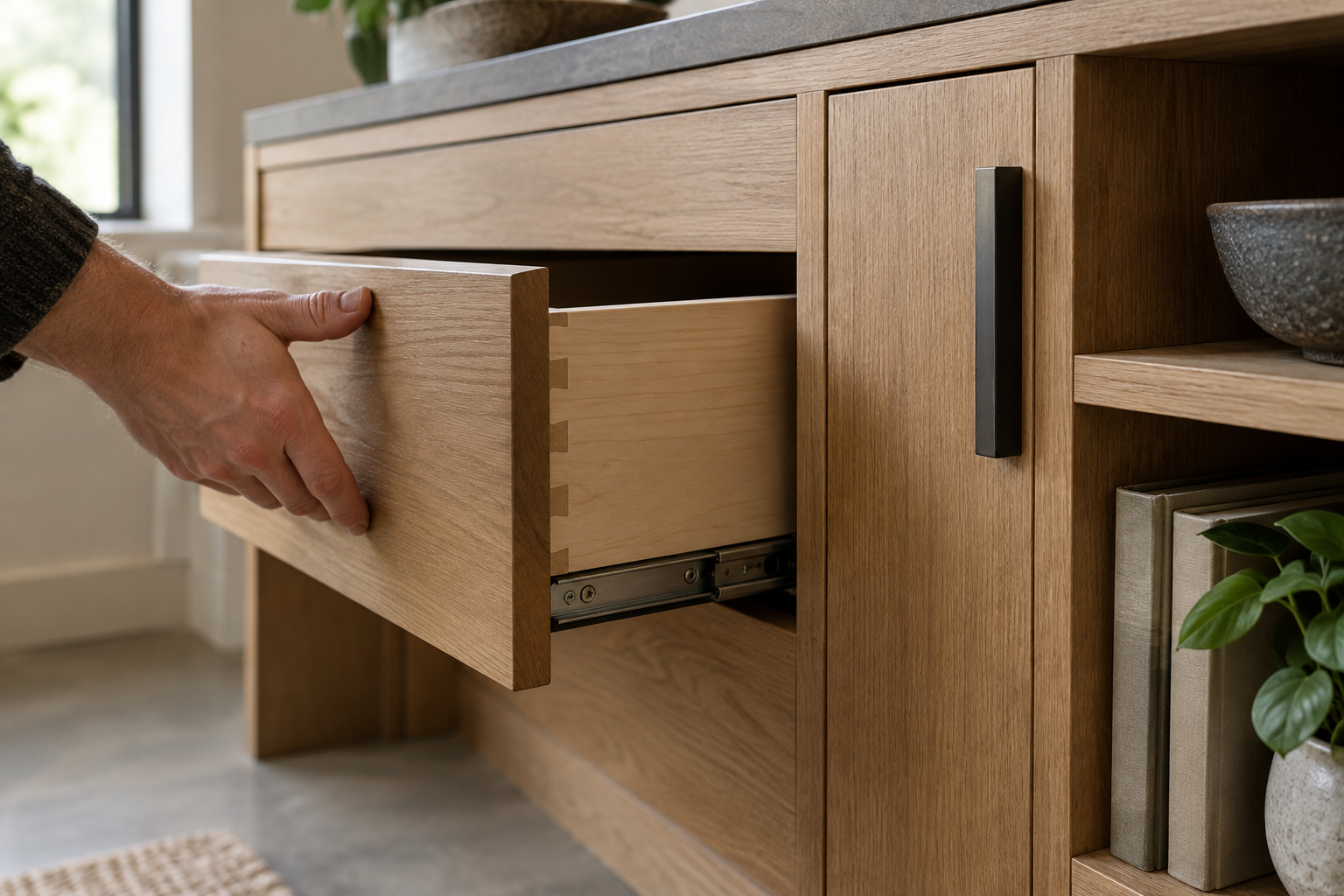
If you are planning custom built-ins, one of the first choices is whether they should have drawers, doors, open shelves, or a mix of all three. The short answer is this: use drawers for small items, doors for bulky items you want out of sight, and open shelves for things you want to reach fast or show off. Most rooms work best with a mix, not just one type.
Start with what you need to store
Before you think about style, make a list of what will actually go into the built-in. Books, games, baskets, files, dishes, toys, cords, and display pieces all need different kinds of storage.
Small loose items are easier to live with in drawers. Bigger items, like serving pieces or extra blankets, usually fit better behind doors. Open shelves work best for books, decor, and things you use often.
Use drawers when you want easy access
Drawers are a good choice for items you reach for a lot, because you do not have to kneel down and move things around to get to the back. They also help keep smaller items from getting scattered.
In a living room built-in, drawers can hold remotes, chargers, board games, and paper goods. In a kitchen or dining area, they can hold linens, tools, or serving pieces. If the goal is to reduce clutter, drawers usually do more work than open shelving.
Use doors for larger items and hidden storage
Doors make sense when you want the room to look calm and clean. They are useful for hiding bigger items that do not need to be on display.
Shelves behind doors can hold bins, media equipment, extra dishes, or seasonal items. If you want a built-in to blend into the room instead of standing out, doors are often the best choice. They also help when the stored items are uneven in shape and would look messy on open shelves.
Use open shelves for display and daily use
Open shelves are best when you want easy access or want the built-in to feel lighter in the room. They work well for books, framed photos, plants, and a few favorite pieces.
The trade-off is simple: open shelves need more tidying. If you are not sure you will keep them neat, use them in smaller sections rather than across the whole wall. That gives you display space without making the room feel busy.
Choose based on the room, not just the wall
A family room built-in may need more closed storage if it holds toys, cords, and electronics. A study may need more shelves for books and files. A dining room may work better with doors and drawers for hidden storage plus a few open shelves for display.
Think about how the room is used every day. If the space is for calm and show, lean toward doors and shelves with a few display areas. If the space has to work hard, add more drawers and closed storage.
A simple rule that helps most homeowners
If you are unsure, use this rule: drawers for small things, doors for hidden things, and open shelves for display. That mix usually gives you the most useful built-in without making it feel too heavy or too open.
You can also ask for a balance that matches your habits. If you are neat and love display, you may want more shelves. If you prefer a cleaner look, add more doors. If your family needs grab-and-go storage, add drawers where hands will naturally reach.
What to decide before the project starts
Before you order, write down what each section of the built-in should do. Note what should be seen, what should be hidden, and what should be easy to reach. That makes it much easier to plan shelf heights, drawer sizes, and door placement.
A good custom project should fit your room and your routine. The best built-ins are not just attractive. They make everyday storage easier and keep the room working the way you want it to.