
How Do You Choose the Right Finish for Custom Built-Ins and Cabinets?
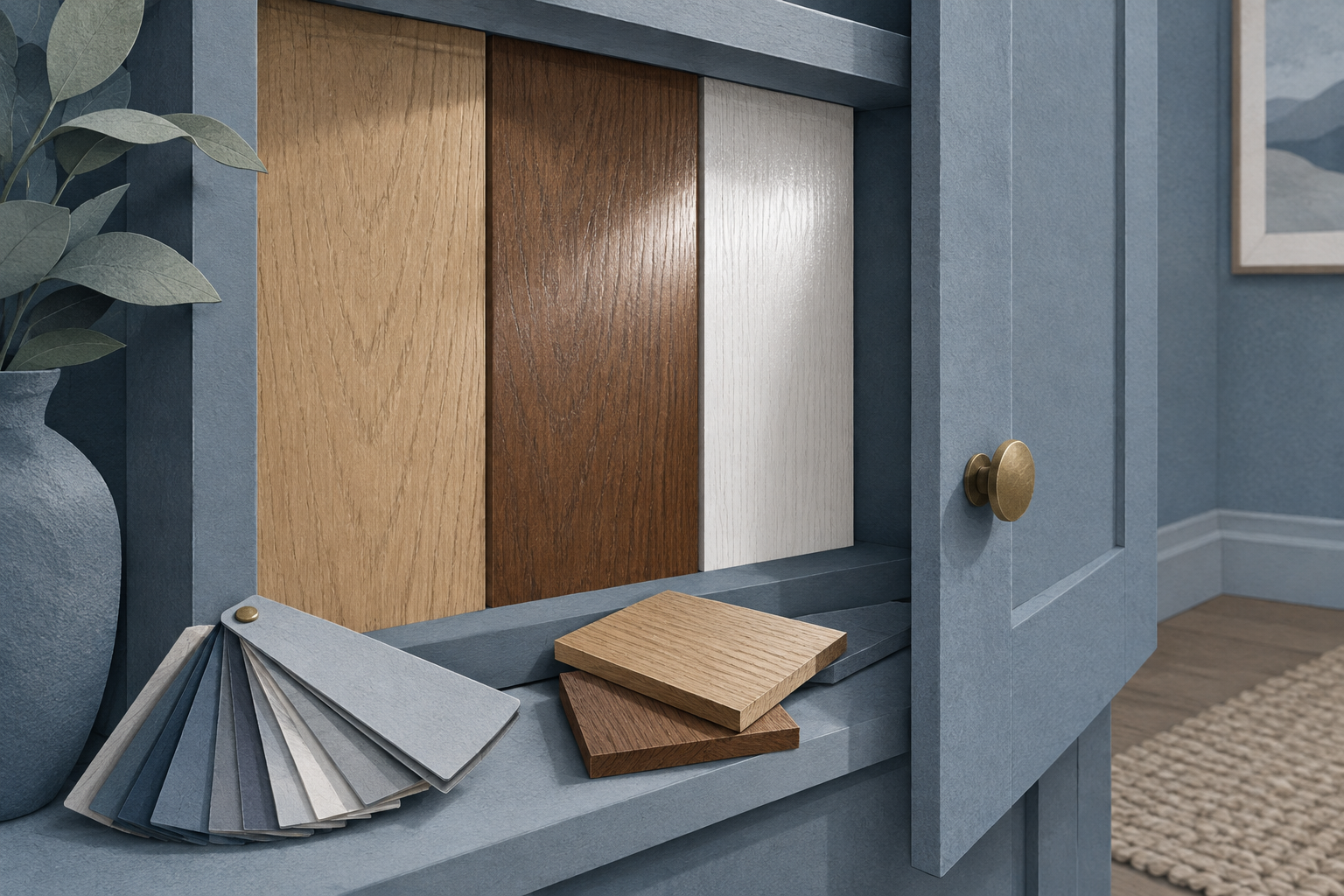
If you are planning custom built-ins, cabinets, or a kitchen island, one of the biggest choices is the finish. The finish affects color, grain, shine, cleaning, and how the piece feels in the room. A good choice is not just about looks. It should match the style of your home, the amount of use the piece will get, and how much upkeep you want to handle. The best time to decide is early, before the build starts, so the wood, stain, paint, and hardware all work together.
Start with the room, not the sample board
A finish should fit the space it lives in. In a bright room, a dark stain may feel strong and formal. In a smaller room, a lighter color can help the piece feel open and calm.
Look at the floors, trim, wall color, and nearby furniture. The finish does not need to match everything exactly, but it should belong in the same family. If the home already has warm wood tones, a finish with a cold or gray look may feel out of place.
Think about the mood you want. Do you want the built-ins to stand out as a feature, or blend in so the room feels quiet and built together? That choice shapes whether you lean toward stain, paint, or a natural clear coat.
Know the plain difference between stain, paint, and clear finish
Stain adds color while still letting the wood grain show through. It is a good choice when you want the wood itself to stay visible and feel warm.
Paint covers the wood grain more fully. It can be a smart pick when you want a clean, built-in look that matches trim or walls. It also works well if the room already has many wood tones and you want to simplify the space.
A clear finish protects the wood while keeping the natural look as much as possible. This is often used when the grain is the main feature and the wood itself is the star of the design.
Each one has trade-offs. Stain can show variation from board to board. Paint can hide the wood character people like. Clear finishes show the wood best but may leave more of the natural color change visible over time.
Match the finish to how the piece will be used
A fireplace surround may be seen more than touched, so the finish choice can focus more on style and room balance. A kitchen island or a family room cabinet gets more daily use, so the finish should hold up to hands, spills, and cleaning.
For high-use pieces, ask how easy the finish will be to wipe down and maintain. Dark, glossy finishes can show dust and fingerprints more quickly. Very light finishes can show marks in a different way.
If the piece will sit near sunlight, remember that wood can change color over time. That does not mean you should avoid natural finishes, but it does mean you should plan for how the piece may age.
Choose sheen with care
Sheen means how shiny the finish looks. A flat or matte finish looks softer and hides small marks better. A satin finish has a gentle glow and is a common middle ground. A gloss finish reflects more light and can make a piece feel more formal.
For many homes, satin is a safe starting point because it gives some life to the wood without looking too shiny. But the right choice depends on the room. A modern space may suit a smoother, cleaner look, while a traditional room may feel better with a warmer, softer sheen.
If you are unsure, look at finish samples in the actual room, not just under shop lights. Light from windows and lamps can change how the color and sheen appear.
Think about the rest of the house, not just one wall
Custom built-ins work best when they feel connected to the home. A bookshelf in one room and a media wall in another do not have to be identical, but they should feel like they belong in the same house.
One practical way to decide is to pick a main finish family and then use small changes from room to room. For example, you might use paint in one area and stained wood in another, while keeping the same style of hardware or trim detail.
If you are planning several projects over time, it helps to decide on a clear direction early. That can keep later pieces from feeling like separate ideas instead of part of one home.
Bring samples into the home before you decide
Wood, stain, and paint all look different in the shop than they do in your house. The safest next step is to view samples in the room where the piece will live.
Set samples near the floors, cabinets, rugs, and wall color. Look at them in morning light and evening light if you can. A finish that looks warm in one light may look cool in another.
If you are choosing between two close options, ask which one will be easier to live with over time. A finish that is slightly less dramatic on day one may still be the better choice if it blends better with the home and ages more gracefully.