
How Do You Choose Between Open Shelves and Closed Storage in a Custom Built-In?
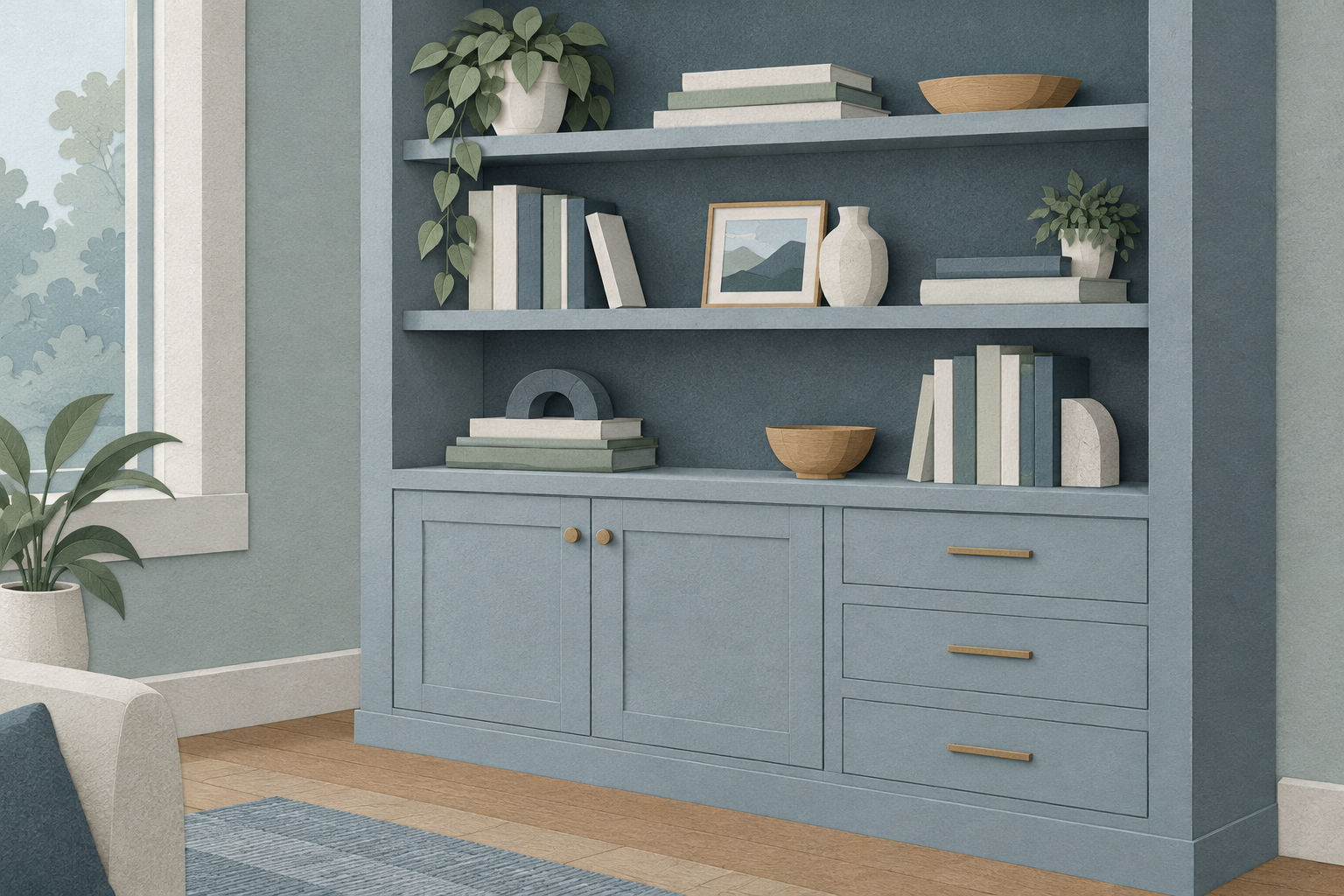
If you are planning a custom built-in, one of the first choices is simple but important: should it be mostly open shelves, mostly closed storage, or a mix of both? The best answer depends on what you need to store, how often you use it, and how neat you want the room to feel. In most homes, the right choice is not either-or. It is a smart mix that fits the room and your daily life.
Start with what you need to hide and what you want to show
A good built-in should match the job you need it to do. Some things are worth putting behind doors, like games, chargers, extra cords, board games, printer supplies, or anything that makes a room look cluttered.
Other items can stay in view. That might be books, a few framed photos, collected pieces, baskets, or dishes you use often and want close at hand. Open shelves work well when the items are part of the room’s look, not just storage.
A simple rule helps: if you would be upset seeing it every day, give it a door or drawer. If you like seeing it and it helps the room feel lived in, open shelving may be the better fit.
Think about how often you will use the storage
Closed storage is best for items you reach for less often or do not want to dust all the time. Doors and drawers also make it easier to keep a room looking tidy with less effort.
Open shelves work best for things you use often or enjoy looking at. A shelf for favorite books, a daily basket, or a few display pieces can make the built-in feel lighter and more personal.
If a shelf will hold many small things, it can start to look busy fast. In that case, drawers or cabinets may do a better job. If the room is already full of large furniture, open shelving can keep the built-in from feeling heavy.
Match the storage to the room’s purpose
The right mix changes from room to room. In a family room, a built-in might need closed lower cabinets for games and media gear, with open shelves above for books or display pieces.
In a home office, open shelves can hold reference books or bins, while closed storage hides files, cords, and office supplies. In a dining area, cabinets may work better for serving pieces, with open shelves used sparingly for display.
Around a fireplace, many homeowners want the surround to feel balanced and calm. A mix of doors below and open shelves above can keep the room useful without making the hearth area feel crowded. For entertainment centers, closed storage often helps with equipment, remotes, and cable clutter, while open areas can hold speakers or display items if planned carefully.
Use open shelves where they help the room feel right
Open shelves can make a wall feel less heavy. They also let you bring in color, texture, and personal items without adding more furniture.
That said, open shelves only work well when you are willing to keep them edited. Too many items can make the room feel busy. If you know you prefer a cleaner look, use open shelves in smaller spots and keep the rest behind doors.
A practical approach is to use open shelves at eye level or higher, where they add style, and use closed storage below, where function matters most. This often gives you the best of both worlds.
Use doors and drawers where real life gets messy
Closed storage earns its place in almost every custom built-in. Doors hide the things you do not want on display, and drawers make small items easier to sort.
If children use the room, if the space doubles as a catch-all, or if you simply do not want to dust every object, closed storage will save time and stress. It also helps a room look finished even when life is busy.
Many homeowners end up happiest with a design that hides the everyday items and leaves room for a few things they truly want to show. That balance usually feels better over time than a wall of open shelves alone.
Decide based on upkeep, not just style
It is easy to pick a look based on photos, but daily upkeep matters just as much. Open shelves need regular tidying. They also collect dust faster than closed cabinets.
Closed storage takes less work to keep neat. If your schedule is already full, that may matter more than the look of open shelving. On the other hand, if you enjoy arranging shelves and keeping them styled, open storage may be worth the extra care.
A good test is to ask yourself what the room will look like on an ordinary Tuesday, not just on the day it is finished. The best design is one you can live with every day.
Ask for a layout that mixes both on purpose
The strongest custom built-ins are usually planned, not guessed. A thoughtful layout can put doors where clutter gathers, drawers where small things belong, and open shelves where the room can breathe.
When you talk through the project, be clear about what you want to store, what you want to display, and how tidy you want the space to feel. If you have a fireplace, media wall, bookshelf, or cabinet wall in mind, those details shape the right mix.
If you are unsure, start with a simple idea: hide the mess, show the rest. From there, a custom layout can be shaped around your room, your habits, and the way you want the space to feel once the work is installed.