
How Do You Decide Between Built-Ins and Standalone Furniture for a Virginia Home?
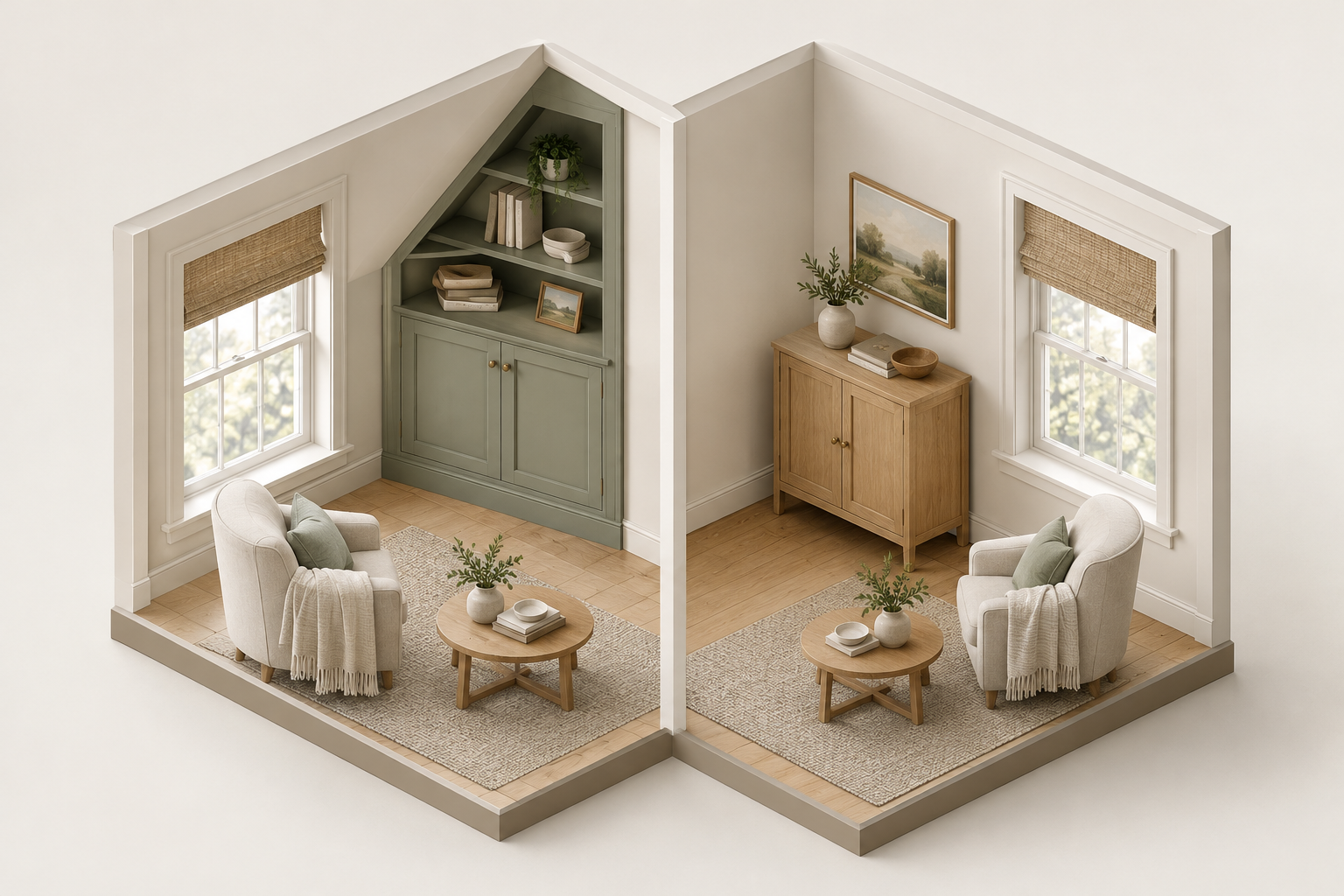
Many homeowners know they need more storage, but they are not sure whether to go with built-ins or a standalone piece of furniture. The simple answer is this: choose built-ins when you want the piece to fit the room exactly, use awkward space well, and feel like part of the house. Choose standalone furniture when you want flexibility, easier moving, or a faster setup. The best choice depends on the room, how you use it, and how permanent you want the solution to be.
Start with the job the piece needs to do
Before you think about style, decide what problem you are trying to solve. Do you need book storage, a place for a TV, display space, hidden storage, or all of the above? If the answer involves an odd wall, a fireplace, or a room with tricky corners, built-ins usually give you a better fit.
Standalone furniture makes more sense when the job is simpler. A cabinet, bookshelf, or entertainment piece can work well if the room already has enough space and you do not need the piece to cover the wall from side to side or floor to ceiling.
When built-ins are the better choice
Built-ins are a strong choice when you want the room to look finished and planned, not pieced together. They work well for bookshelves, media walls, fireplace surrounds, and storage in rooms with unused wall space.
They also help when you want storage that follows the room instead of fighting it. A built-in can be shaped around trim, outlets, windows, or a fireplace. That matters in older homes and in rooms that do not have clean, simple dimensions.
Another plus is that built-ins can make a room feel larger and more settled because they use space more efficiently. Since JP Senior Wood Works designs and installs custom built-ins for homes across Virginia, the project can be planned around the room layout, finish choice, and installation conditions of the home.
When standalone furniture makes more sense
Standalone furniture is often the better pick if you may move soon, if you rent, or if you want the freedom to rearrange the room later. A freestanding bookcase or cabinet can come with you if your needs change.
It can also be the right call if you want a smaller project or need something faster to place in the room. You do not have to commit to a wall-to-wall layout, and you can test the size and style before making a larger investment.
The trade-off is that standalone furniture usually leaves some space unused around it. That may be fine in a simple room, but it can look unfinished in a space that needs a built, intentional feel.
Think about how the room is used every day
A room that gets used hard should guide the decision. If kids drop backpacks near the entry, if a family watches TV in the same room every night, or if you need a place to hide cords and devices, a custom built-in can solve several problems at once.
If the room changes often, such as a den, guest room, or hobby space, a freestanding piece may give you more freedom. You can change the layout without starting over.
A good test is to ask: does this room need a fixed solution, or a flexible one? That question usually points you in the right direction.
Compare fit, cost, and long-term value
Built-ins usually take more planning and a bigger commitment, but they can add a tailored look that feels made for the home. They are often the better choice when the goal is a polished room that works for years.
Standalone furniture often costs less up front and gives you more options later. It can be a smart choice when you want to improve the room without changing it permanently.
If you are weighing the two, think about more than price alone. A less expensive piece that never quite fits may not solve the problem. A custom built-in that uses every inch well may be the better long-term answer.
A simple way to make the decision
Use this quick check. Pick built-ins if you want a permanent fit, need to use a tricky wall, or want the piece to look like part of the house. Pick standalone furniture if you want flexibility, easier moving, or a smaller commitment.
If you are still unsure, measure the wall, note what has to be stored, and think about how the room must work day to day. That gives you a clear starting point for a design conversation.
For Virginia homeowners who want something custom, a good next step is to share the room size, photos, and the storage goal. That makes it easier to decide whether a built-in, a cabinet, a bookshelf, or a custom furniture piece is the better fit.